Role: Brand Manager, United Ways of California
Challenge: United Ways of California is a network of dozens of independent local United Ways across the state, each with its regional priorities, and communications team. Leadership wanted a single, unifying statewide brand that regional United Ways could opt into and adapt, strong enough to support a major paid media push, including a first ever Super Bowl ad on Univision, while still being flexible enough to serve each region’s own priorities. There was no existing landing page or campaign infrastructure to send that media spend to, and no clear owner for turning creative concepts into a finished digital destination.
Another sizable gap existed leading up to the 2024 Presidential Election: United Way’s global brand gives no direction on voter engagement messaging, even though the network wanted to use this same trusted, recognizable brand to encourage nonpartisan civic participation. We saw an opportunity to build that framework ourselves, in a way that stayed strictly nonpartisan and could adapt to serve each region’s community.
Solution: I reviewed and art directed concepts coming back from a consulting team: approving ad copy, checking layouts against brand standards, and ensuring Spanish assets were also created, before anything went out to the network. I helped shaped the messaging itself, for example pushing the team toward language like “Every Californian Empowered” over “Empowering Every Californian” to keep the individual at the center of the message rather than United Way, and helped coordinate the Spanish translation of “Unidos por el bien común” for “United for good” that the whole campaign would build around. When the campaign expanded into a statewide Super Bowl media buy with Univision, I took on that same role, signing off on the broadcast spots and digital assets against tight production deadlines.
The campaign needed a call-to-action URL that did not yet exist. Starting from a rough digital wireframe our consulting team had drafted, I spent about a month refining that into the final unitedforgood.org, coordinating with our marketing and communications team on bilingual copy for each section, then built out the site itself in under a week, including the “Find My United Way” page to route visitors to the correct regional United Way based on their county and need, working directly with each region to confirm their own program links.
Once our engagement with the consulting team ended, the campaign was ours to carry forward. I wrote a full brand guide to formalize the standards that had lived mostly in the consulting team’s working files, covering colors, typography, imagery, and message tone, so the network could keep using the brand consistently on its own, and I began fielding requests directly from local United Ways who wanted to adapt the brand for their own markets.
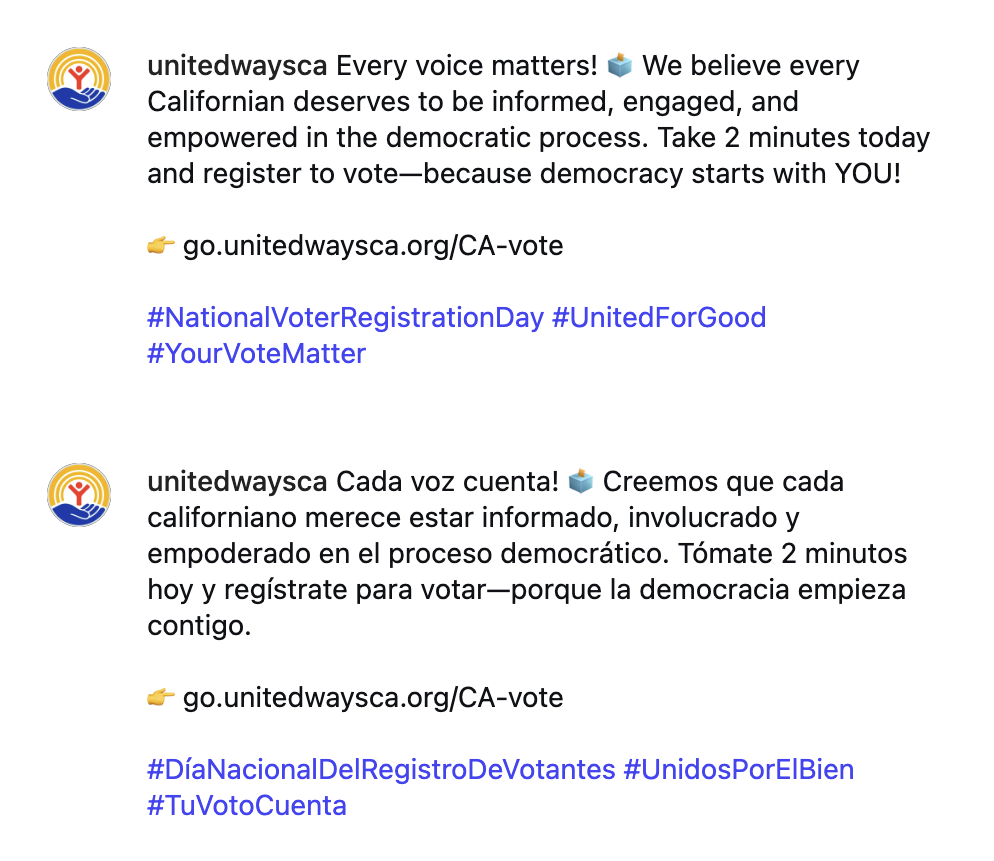
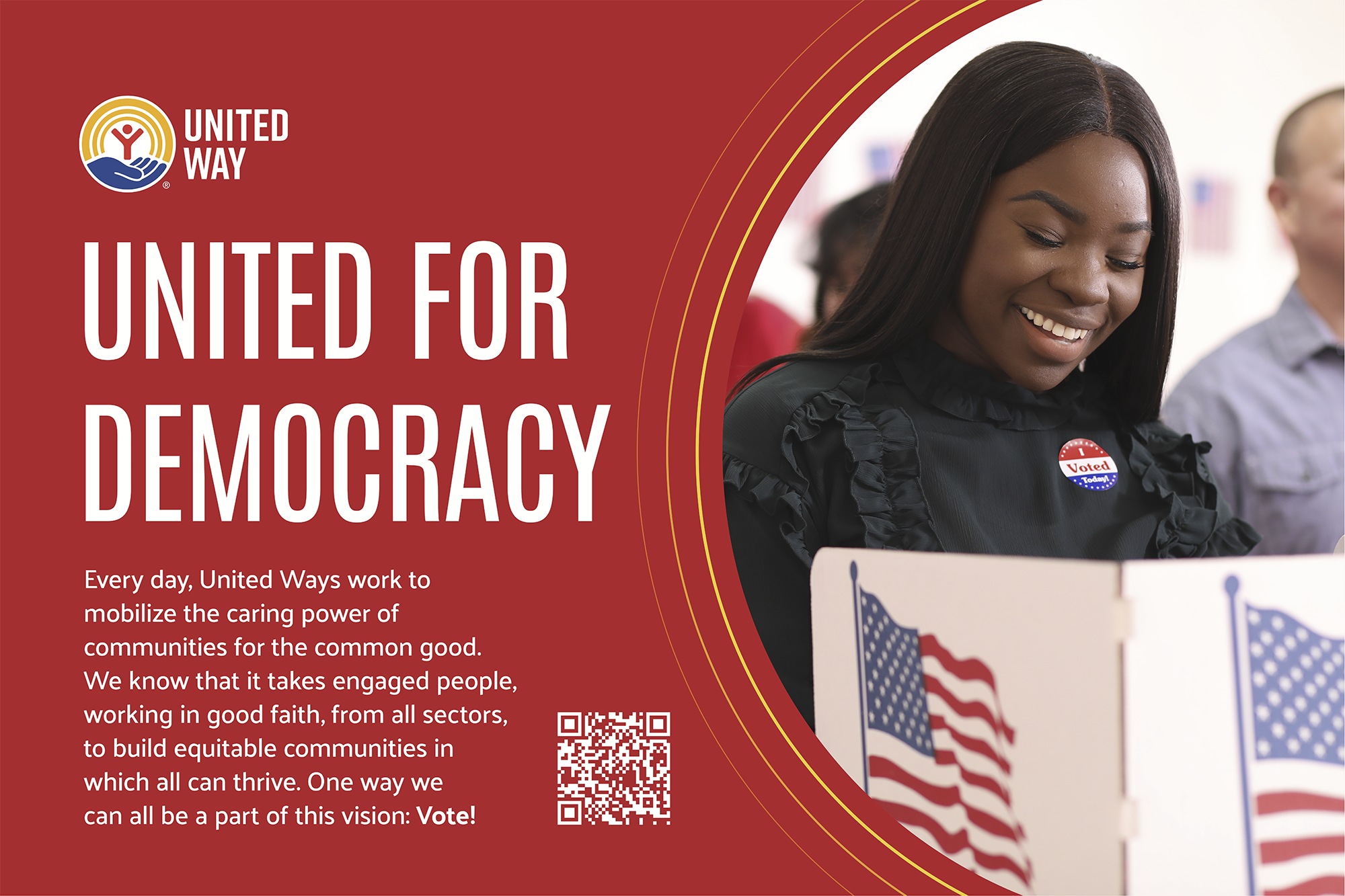
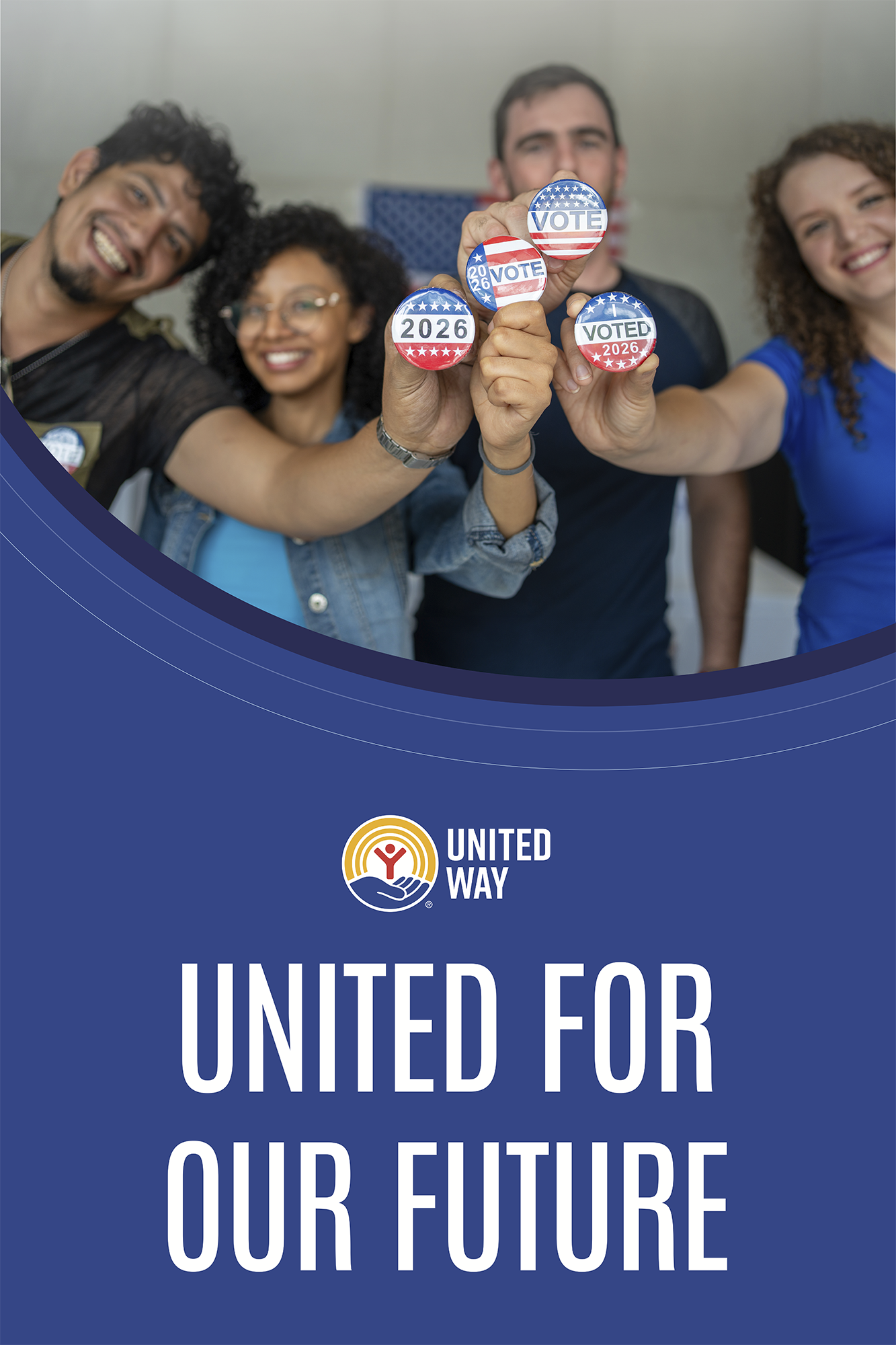
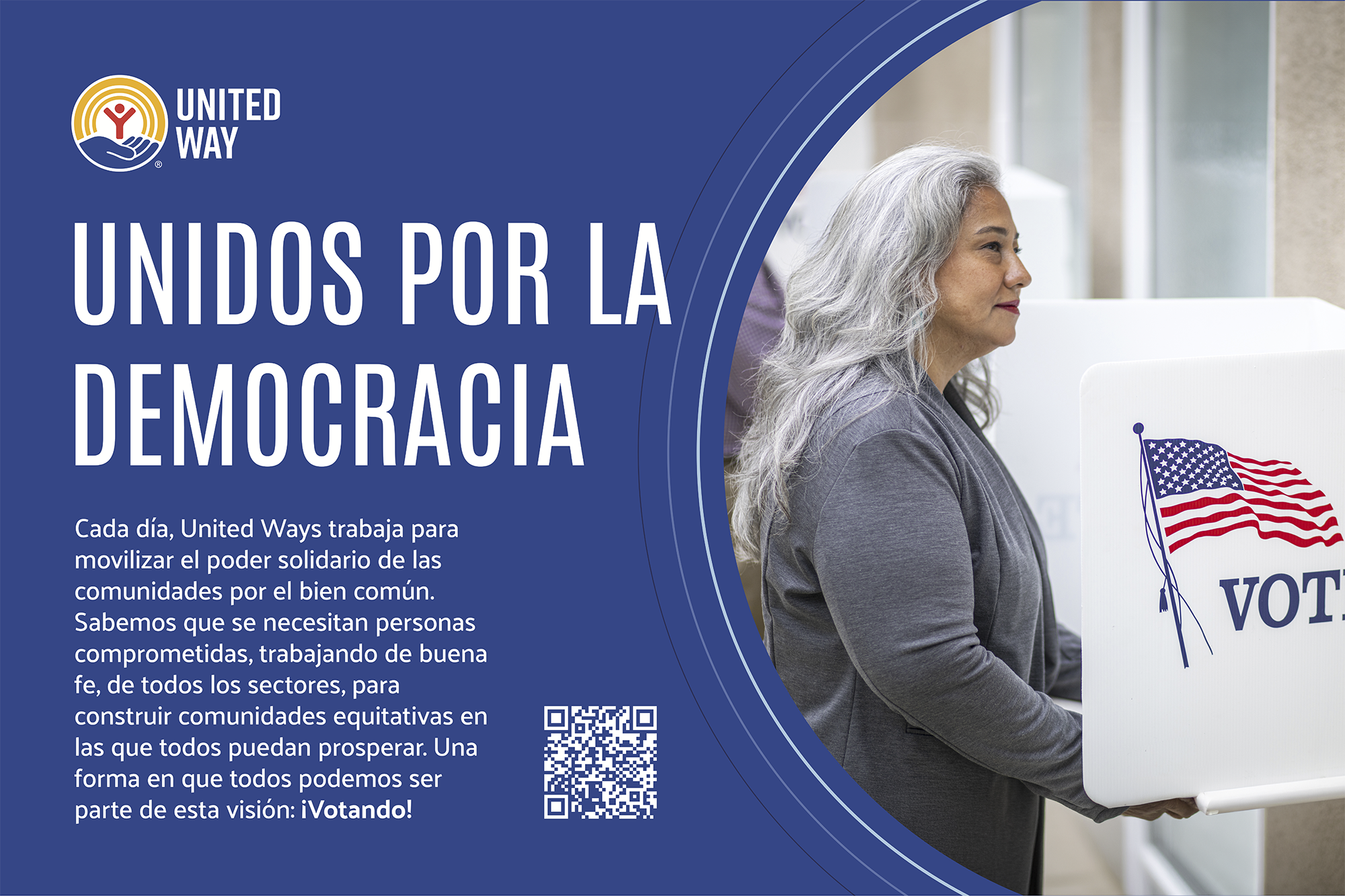
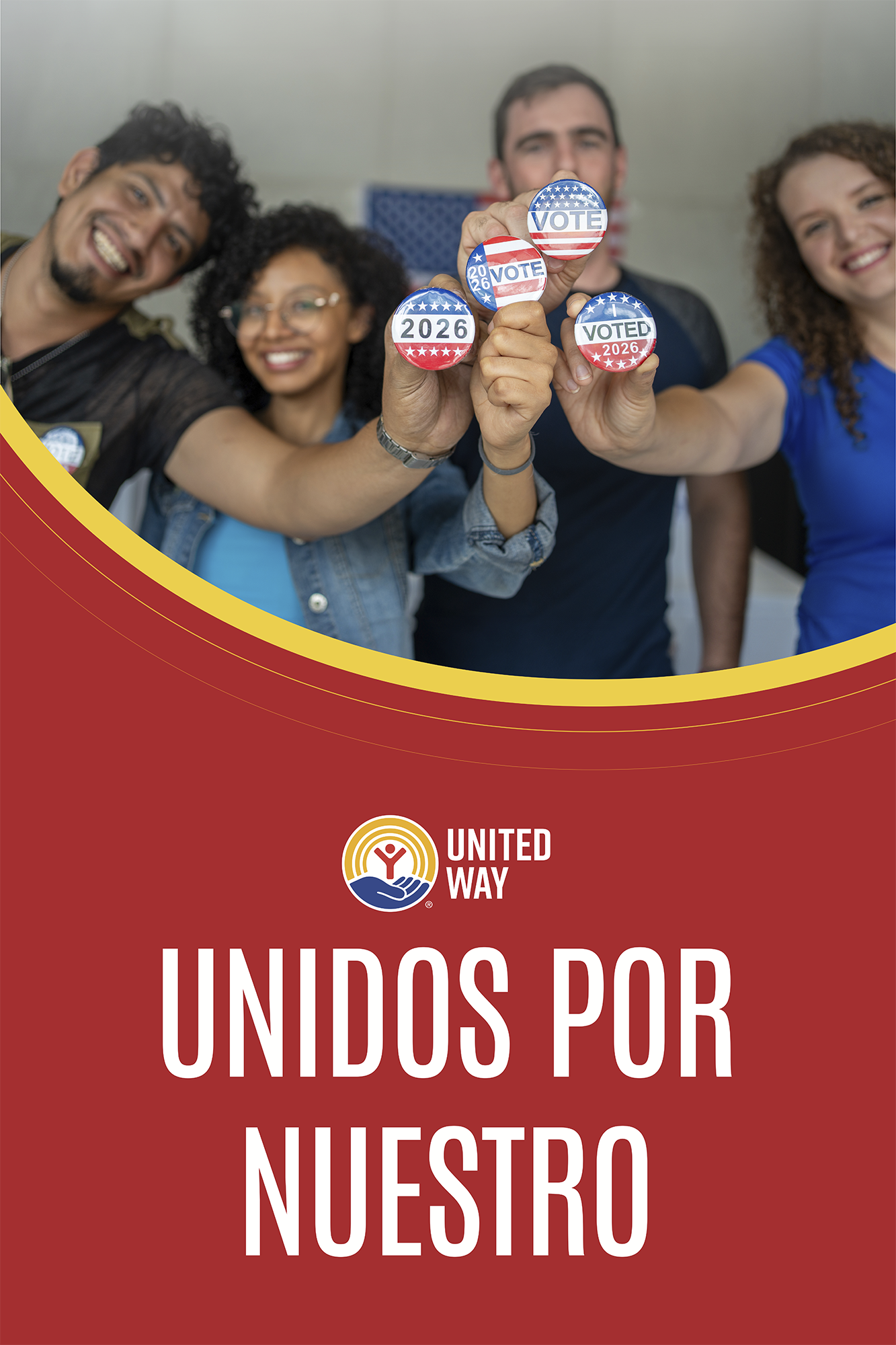
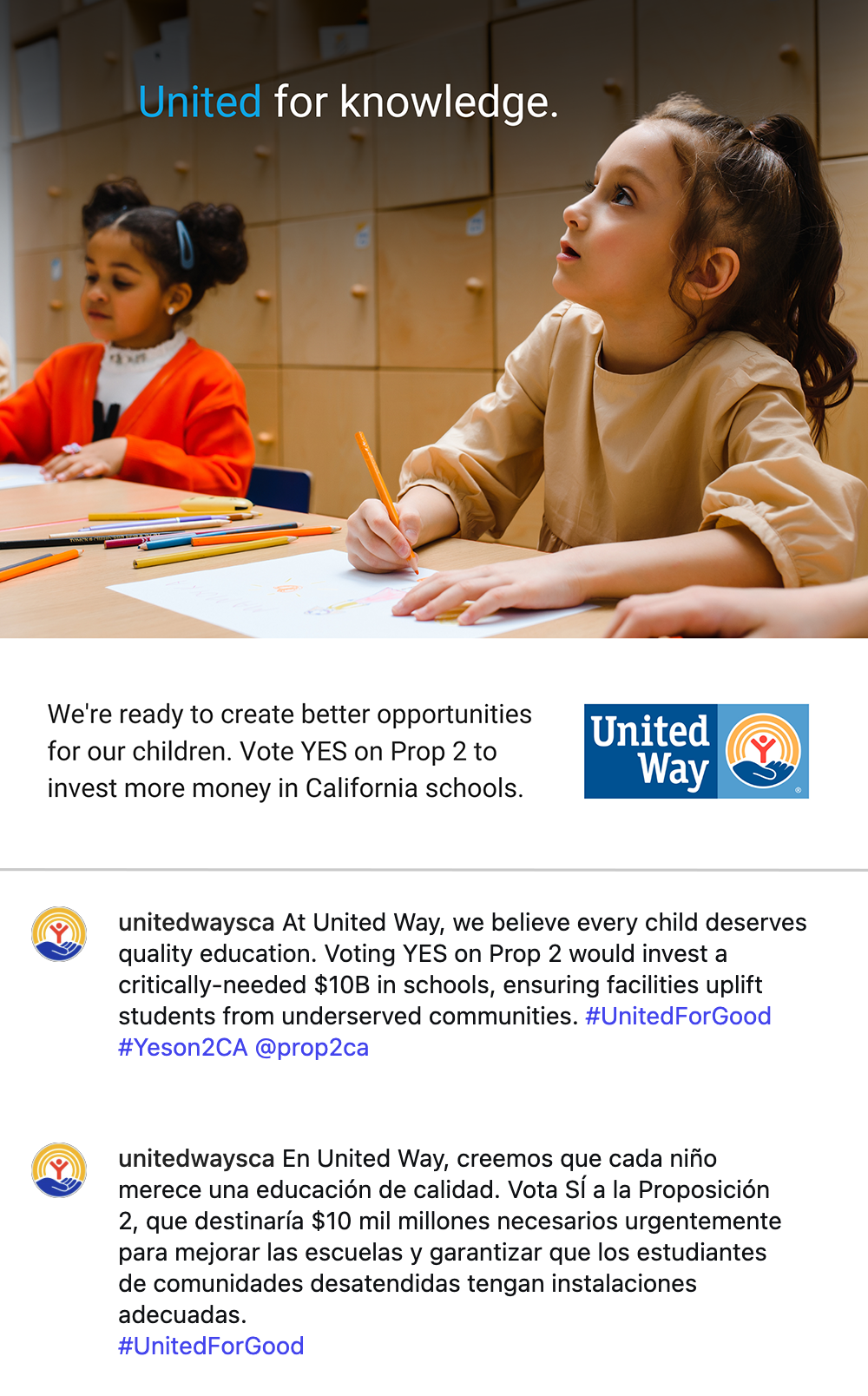
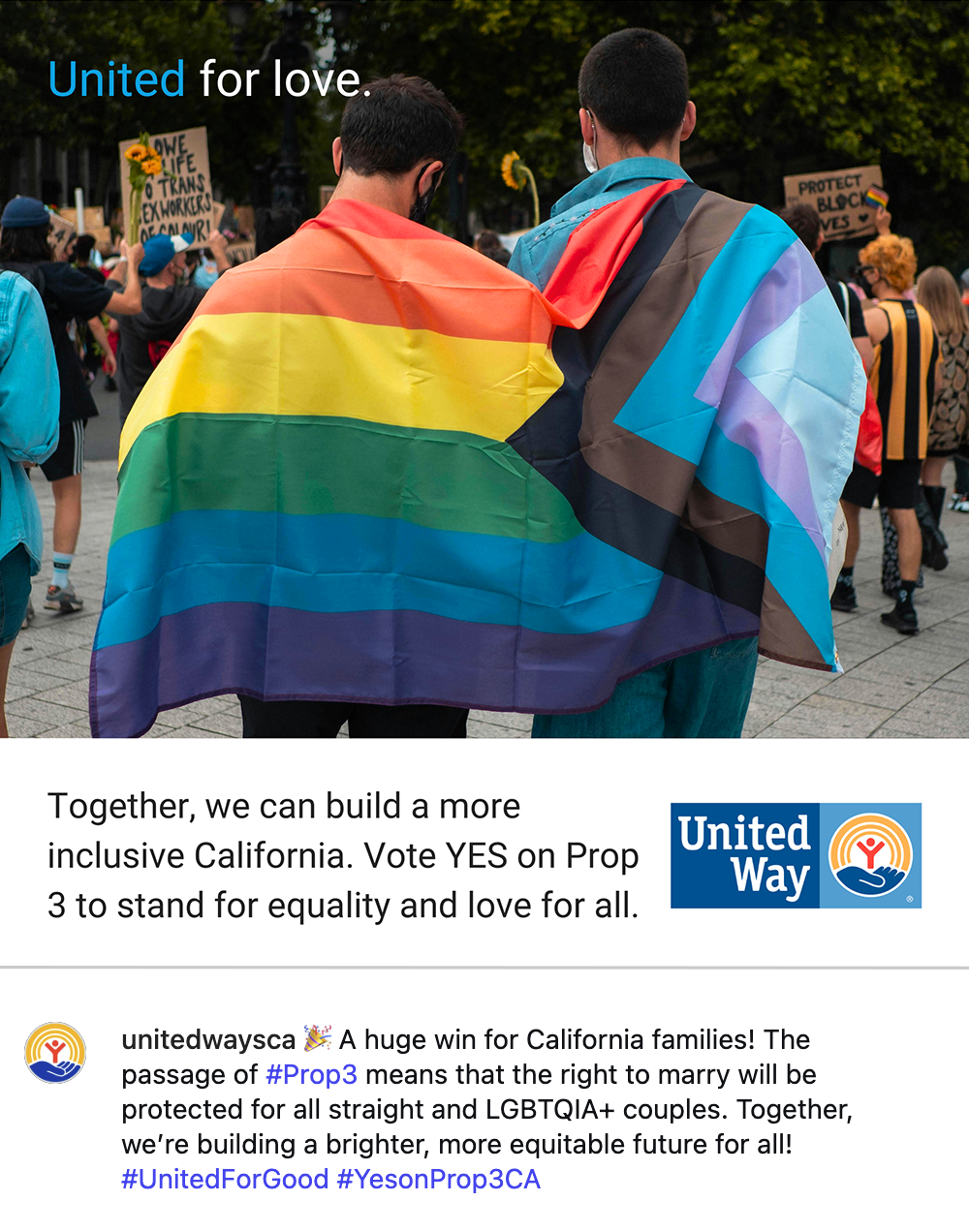
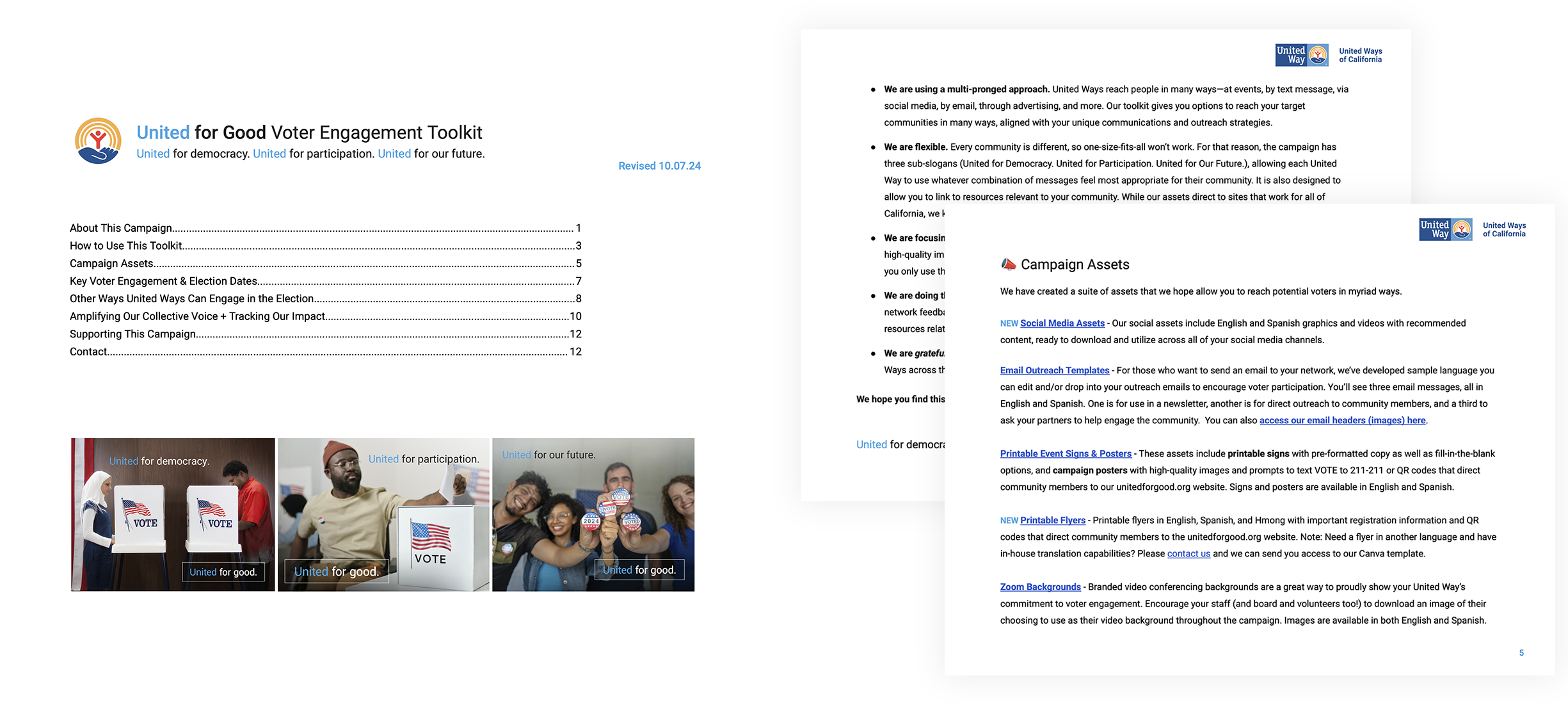
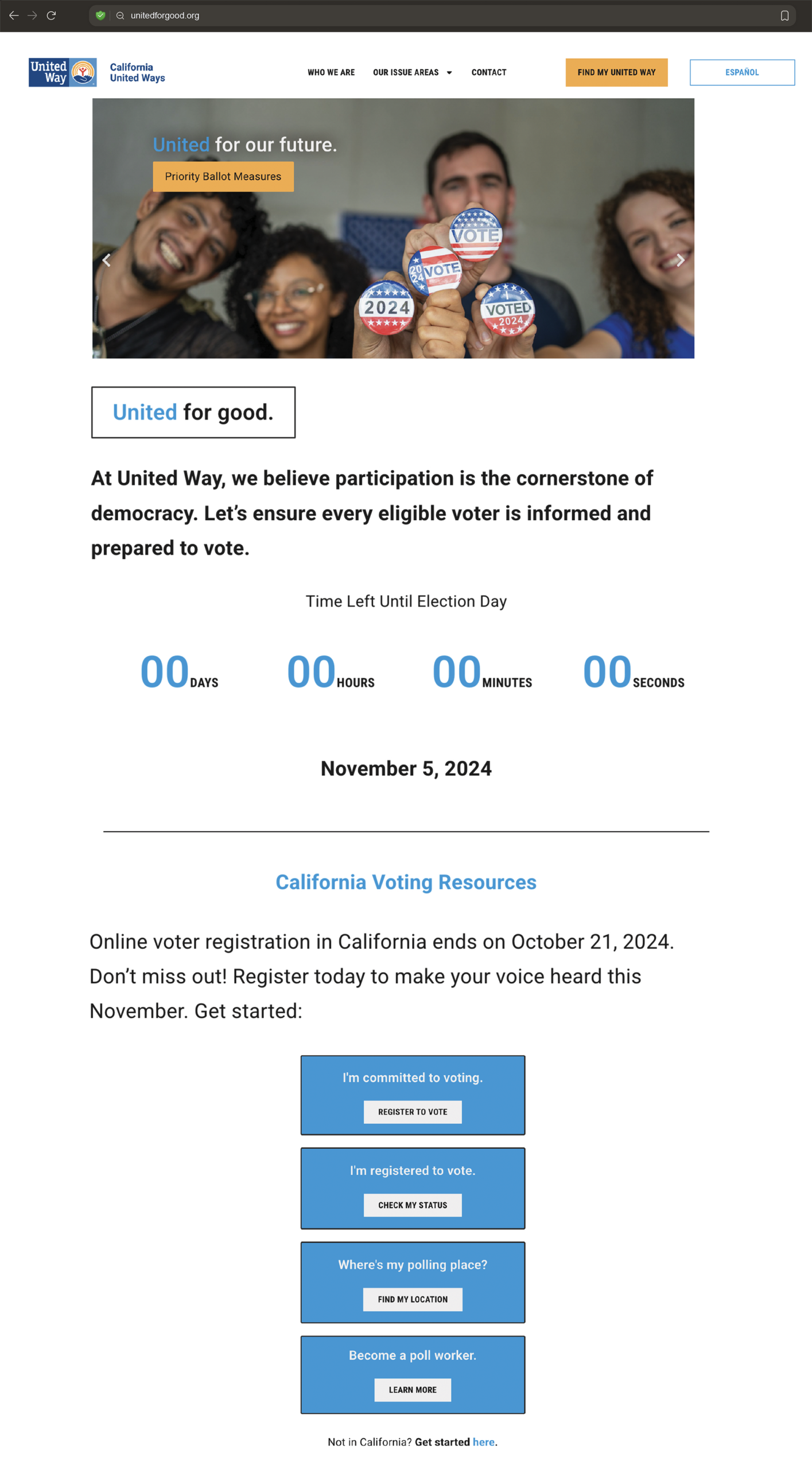
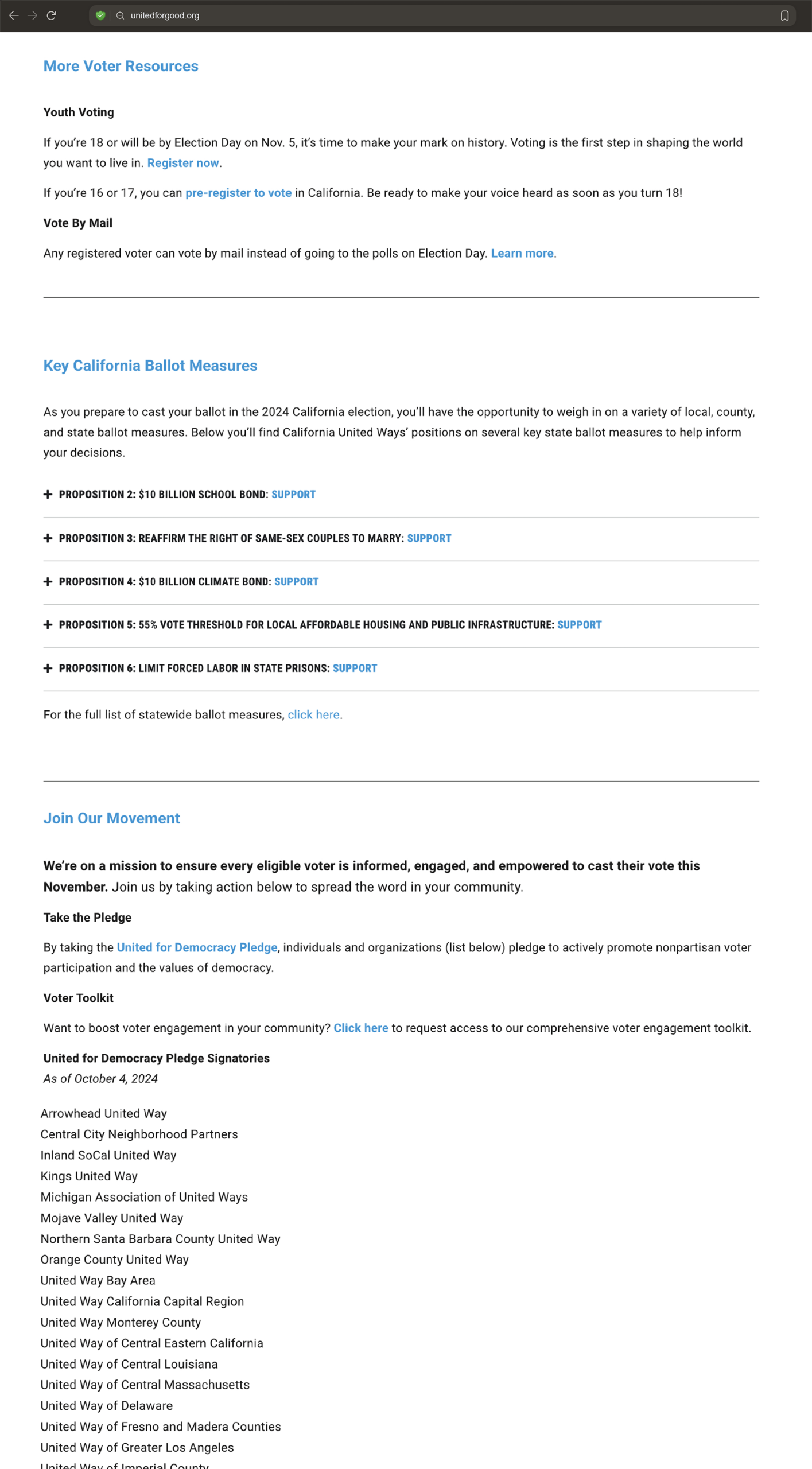
Recognizing the gap in voter engagement messaging, we initiated a nonpartisan voter engagement campaign using the system we’d documented. We ran a working session with partners from across the network to align on the approach, walking through potential assets like a 211-211 text flow, social toolkit, and voter landing page, and gathering live feedback on messaging and imagery. From there, I coordinated with our marketing & communications and policy teams on copy, and directed a full toolkit of bilingual graphics, email templates, printable signage, and ballot measure messaging that repurposed the “United for ___” brand architecture into get-out-the-vote content the network could use at scale. We also built out a dedicated voting hub on unitedforgood.org with a live countdown to Election Day, California ballot measure positions, and pledge signatories, and coordinated with our digital systems team to set up a 211-211 text flow so voters could text VOTE to get registration help directly.
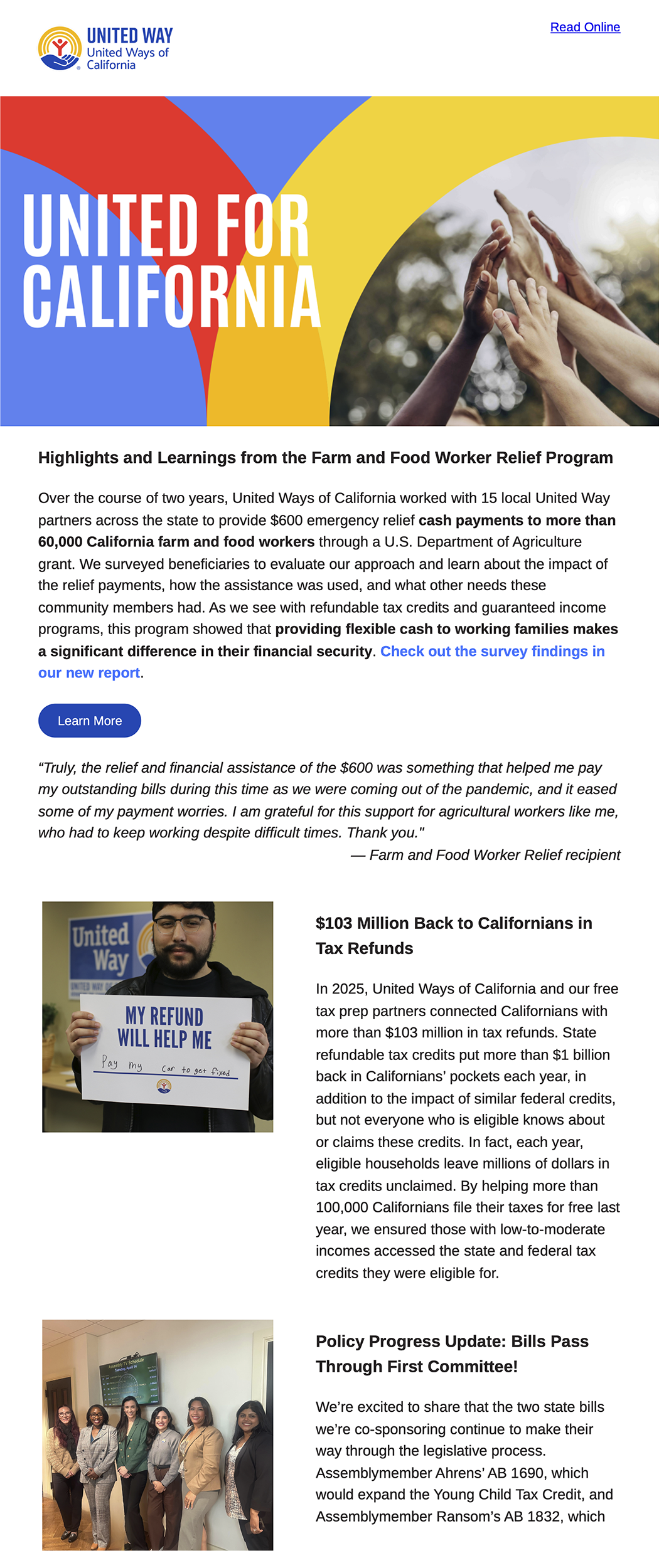
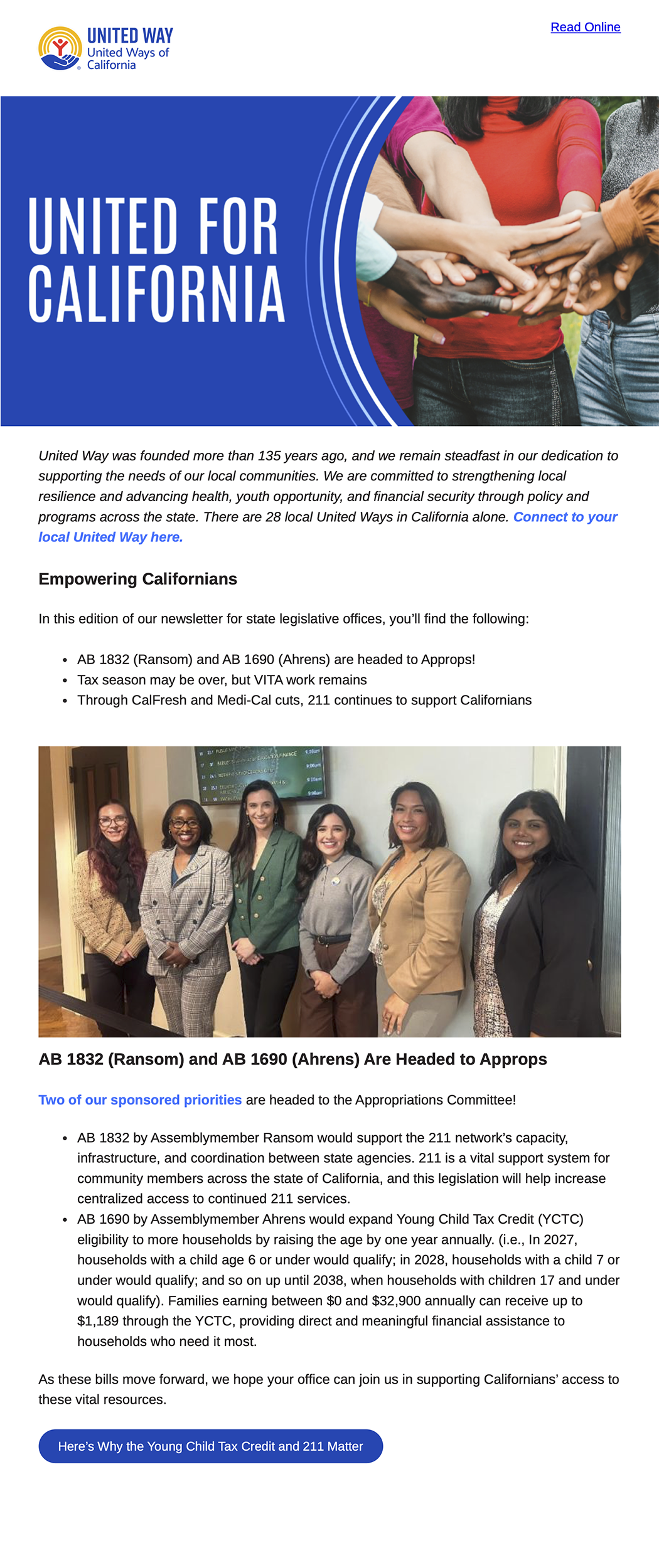
The framework proved durable well beyond its original scope. Even after United Way’s global rebrand, we extended the same “United for ___” message architecture under the refreshed brand.
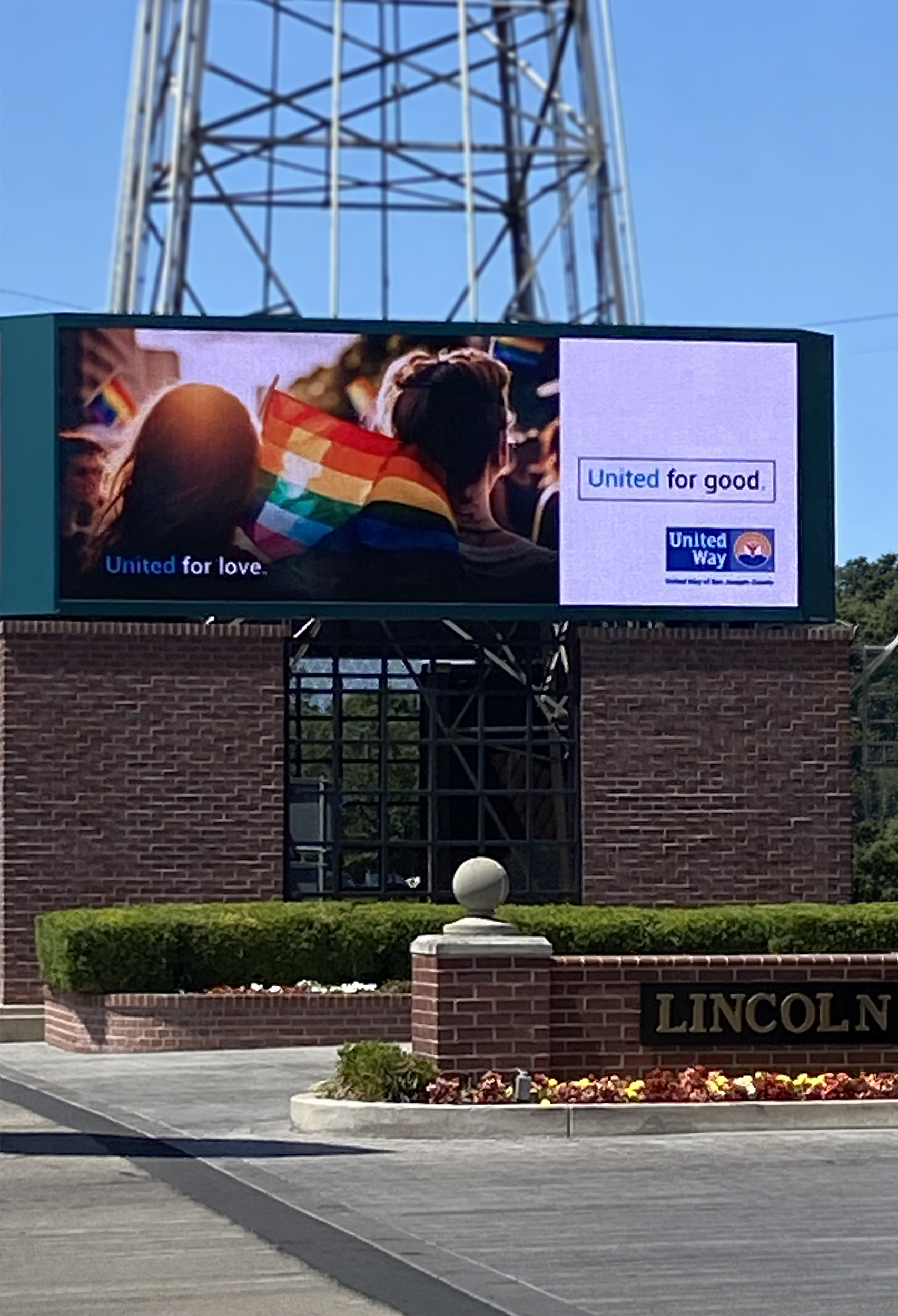
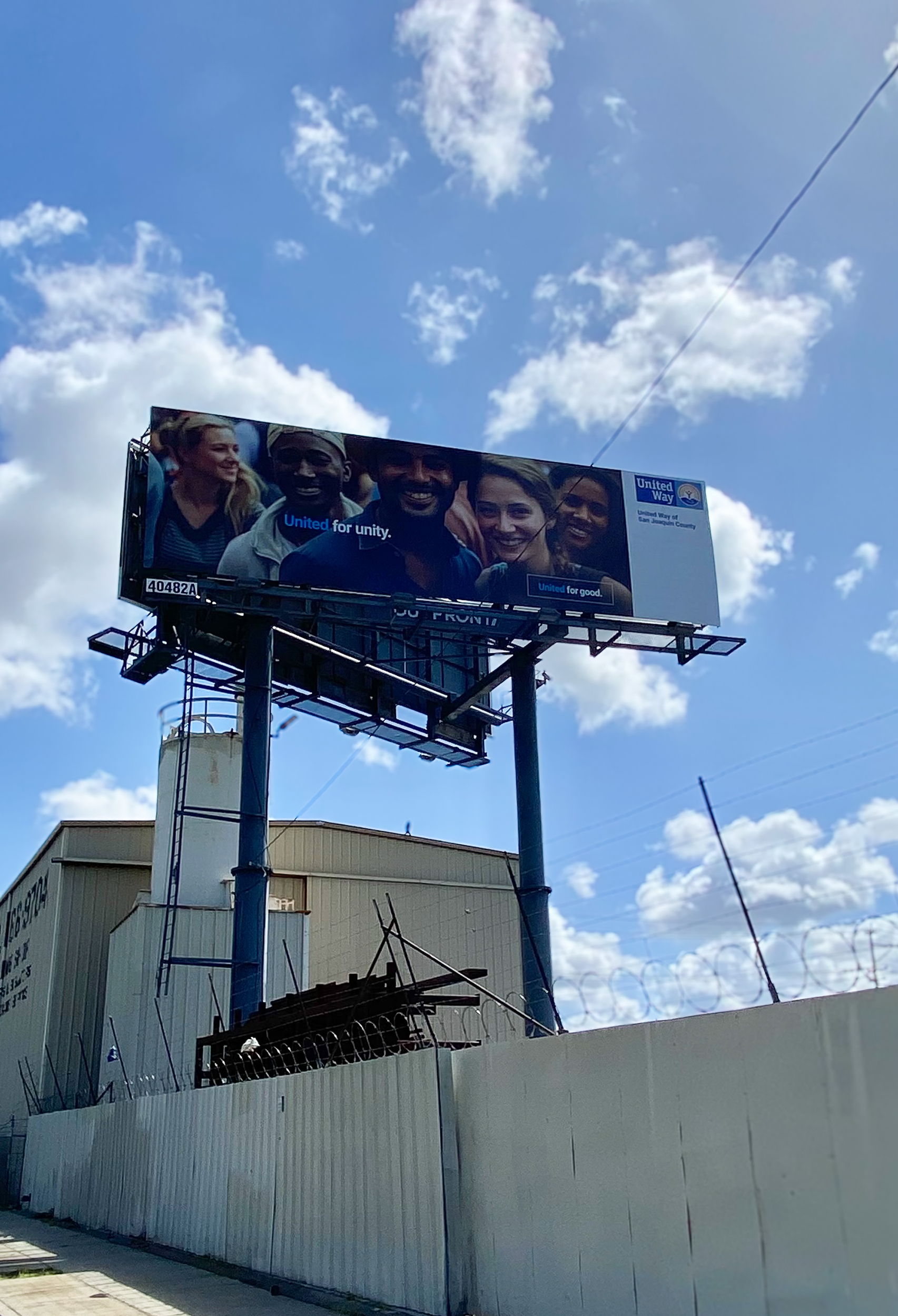
Results: The campaign gave a statewide network a shared visual identity for the first time, anchored by a Super Bowl broadcast placement plus a paired streaming and social push, and a self-built website that gave every regional United Way a home for their programs under one statewide brand. Local United Ways were able to produce their own on-brand out-of-home advertising under our direction, extending the campaign’s reach without diluting it. The voter engagement campaign filled a real gap the global brand left open, letting the network speak with one consistent, nonpartisan voice across an entire election cycle, entirely on our own initiative, with buy-in built directly from partner feedback. The brand system we documented outlived the original consulting engagement and proved adaptable through the organization’s global rebrand, continuing to shape civic engagement materials at a regional level years later.